We are Curious
We know you have lots of queries around menstruation and menstrual products. Get all your queries answered on puberty, menarche, menopause and menstrual hygiene in this section. Have a great period!
 Menstruation
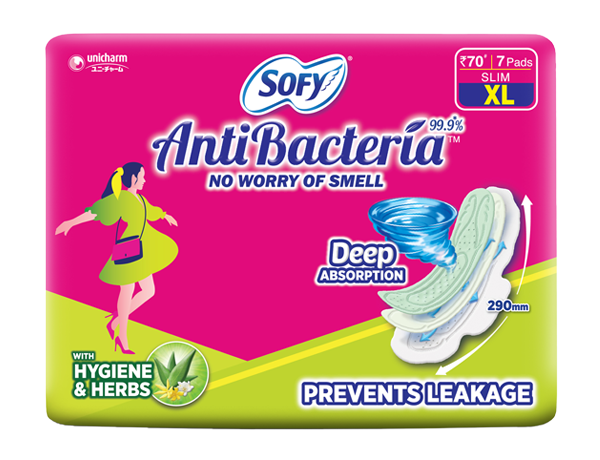 Sanitary Napkins
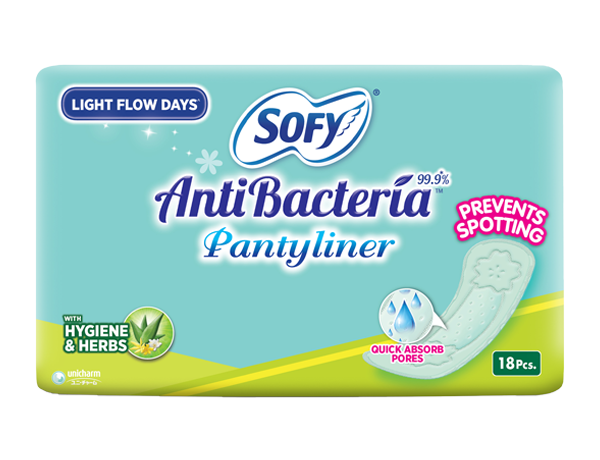 Pantyliners
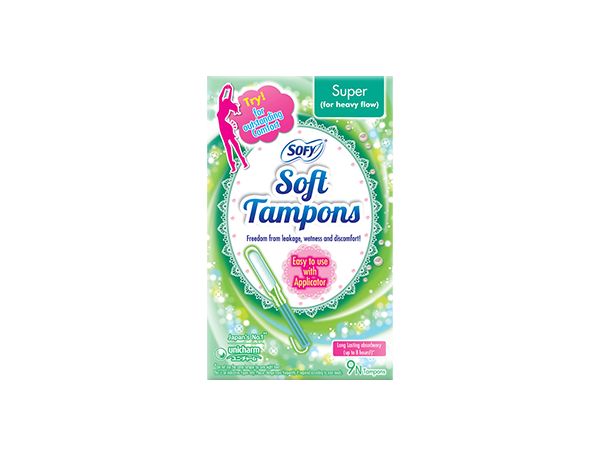 Tampons
What is menarche?
The onset of puberty – when a girl has her first period, it is known as Menarche. It may take place between 9 – 15 years of age. During this time, girls observe bleeding for the first time from their vagina.
What is menopause?
With menarche, the bleeding becomes a periodic occurrence in a girl’s life with the cycle of bleeding observed in a gap of 22 – 40 days. Menstruation usually stops between the age of 45 – 50 years, which is called menopause.
What is a menstrual cycle?
A menstrual cycle begins from the first day of one period and ends at the first day of the next. A typical cycle of an adult female is 28 days, although some are as short as 22 days and may be as long as 40 days. Periods usually last for 3-7 days. During a menstrual cycle, a woman passes out 2-4 tablespoons (30 – 59ml) of blood.
What is Pre-Menstrual Syndrome (PMS)?
PMS includes various types of emotional changes that many girls experience before their period begins. These symptoms include food craving, depression, irritability etc.
Does menstruation lead to anaemia in girls / women?
This is one of various myths associated with menstruation. The fact is that in healthy girls / women, menstruation doesn’t cause iron deficiency.
Should you not bathe or wash your hair during menstruation?
This is one of the various myths associated with menstruation. The fact is that taking bath is important especially during menstruation so as to keep oneself clean and hygienic. A nice warm water bath can help in relieving menstrual cramps and premenstrual tension.
Is it harmful to exercise or do strenuous activities during menstruation?
This is one of the various myths associated with menstruation. The fact is that it is a normal process and one can continue with the daily routine.
Is a menstruating woman impure or sick?
This is one of the various myths associated with menstruation. The fact is that menstrual fluid is a mixture of blood and tissues and no woman is impure when she is menstruating
How to avoid rashes and infection during menstruation?
To avoid rashes, keep the area between the thighs dry and clean. Wash your genital area properly with water and dry it after every time you go to the toilet. Always wipe from front to back direction after defecation to avoid infection. Change the pad after every 4-5 hours for hygiene and to avoid staining and foul odor. Keep yourself clean and bathe regularly.
How to take care of oneself during menstruation?
Some tips for taking care of yourself during periods are as follows: –
- Eat a balanced diet rich in fruits and vegetables.
- Eat an iron rich diet to avoid anaemia.
- Foods like meat / dal / green leafy vegetables and beans are recommended.
- Reduce intake of salt which causes water retention.
- Take a brisk walk to relieve stress.
- Put a hot water bottle on the abdomen, which may help relax.
- Do regular exercise.
What abnormalities in menstruation suggest that one should visit a doctor?
You must consult a doctor if your periods:
- Started before the age of 8 years
- Have not started by the age of 15 years
- Comes before 22 days or is as late as 40 days
- Are heavy or scanty
- Are very painful and you’re not able to continue your routine work
How to use sanitary pads?
Using a sanitary pad is quite simple as you just have to follow 4 steps: –
- Peel off release paper from the back of the pad
- Stick the pad on panty and press firmly
- Peel off release paper from the wings
- Fold the wings around panty and press firmly
Can sanitary pads cause infection?
Using sanitary pads judiciously is very important. Menstrual blood is contaminated and using a sanitary pad for long hours is unhygienic, it can cause rashes, UTI or vaginal infection. A sanitary napkin should ideally be changed every 5-6 hours but if you have a heavy flow, it should be changed more often.
How frequently should I change the sanitary napkin?
Typically a sanitary napkin lasts for 7 to 8 hours, however in case of heavy flow it should be changed every 3-4 hours to maintain hygiene and avoid rashes and infection.
How to dispose of sanitary napkin after use?
You can dispose of the sanitary in 3 simple steps: –
- Roll the used pad in waste paper or individual wrap
- Throw used pad in a dustbin which is regularly cleared
- Store pads in a hygienic and dry place
What are Sofy’s sanitary napkins made of?
Sofy’s sanitary napkins are made of non-woven cotton like material. Its deep absorbent sheet absorbs flow till last layer which keeps the top sheet visibly cleaner and hence prevents leakage.
Do sanitary napkins have any expiry date?
Sanitary Napkins are best to use before 3 years of manufacturing date.
Which sanitary napkin is best for heavy flow?
Sofy Antibacteria Extra-long keeps you completely safe from leakage and smell on your hevy flow days. It has a deep absorbent sheet that prevents leakage and gives you 99.9%* protection from bacteria that causes smell. (*According to 3rd party laboratory examined data)
Which sanitary napkins should be used at night?
Women need extra protection at night so that they can sleep peacefully and when they wake up there is no stain on their clothes and bed sheet. Sofy Antibacteria Overnight with Green sheet that gives 99.9%* bacteria protection along with longer length and wider hip guard for extra protection from back leakage.
What are the variants available in Sofy sanitary napkins in India?
There are two types of Sanitary Napkins available for Sofy – Day Napkins & Night Napkins. Both napkins are available in 2 variants – Antibacteria and Body fit. To know more about the sanitary hygiene products, click here.
What is Sofy Antibacteria sanitary napkin and what are its special feature?
Sofy Antibacteria sanitary napkin keeps you completely safe from leakage and smell on your heavy days. Its special features include: –
- Deep absorbent sheet – It absorbs flow till the last layer which keeps the top sheet visibly cleaner and hence prevents leakage
- Green sheet for Antibacteria – Napkin has a green sheet with natural ingredients which gives 99.9%* bacteria protection for long lasting hygiene. (*According to 3rd party laboratory examined data)
- Perfume tree fragrance – For fresh and confident feeling
- Comfy dry cover – Gentle to the skin
To know more about Sofy Antibacteria, click here.
What is Sofy Bodyfit sanitary napkin and what are its special feature?
This napkin gives you freedom from leakage even on your heavy days and helps you conduct your activities with ease. Because it has additional “DEEP ABSORBENT SHEET” that absorbs flow till the last layer which keeps the top sheet visibly cleaner and hence prevents leakage. Its special features include: –
- Multi leak control lines – Prevent flow from reaching the edges
- Comfy Dry Cover – Gentle to the skin
To know more about Sofy Bodyfit Sanitary Napkins.
What is a vaginal discharge?
As a normal part of the menstrual cycle, few days after periods, during the ovulation days women experience vaginal discharge (commonly referred to as white discharge).
Why does the vaginal discharge happen?
This is caused by the influence of female hormones. It has an important protective function by keeping the vagina lubricated and preventing bacteria and other germs from entering the uterus. This is a part of the self-cleansing mechanism of the vagina.
What kind of discharge is normal?
The amount can vary, as can odor and its color depending on the time in your menstrual cycle and varies for each person. It can range from clear to a milky white-ish or light yellowish color. Texture also ranges from being watery to thick-sticky.
What are Pantyliners?
A pantyliner is an absorbent piece of material used for feminine hygiene. It is worn in the crotch area of a woman’s panty to keep it clean. Mainly for absorption: –
- Daily vaginal discharge
- Menstrual spotting a day before or after period days
Women can use Pantyliners on all non-period days, in the daytime.
How to use a Pantyliner?
Pantyliner can be used in 2 simple steps: –
- Peel off release paper from the back
- Place the Pantyliner on the crotch area of the panty and press firmly
How to dispose of the Pantyliner?
Wrap used pantyliner in individual wrap and throw in a dustbin. Do not flush pantyliner, it may cause clogging of drains.
What are the benefits of using a Pantyliner?
Pantyliners have the following benefits when it comes to feminine hygiene: –
- Dry and clean feeling for confidence – Freedom from wetness and stickiness from discharge
- Keeps panty clean – Washing soiled-stained panties can be a tedious task which is made easier by the Pantyliners
- Fresh feeling with no worry about smell – Discharge is often smelly and Pantyliners solve the problem with light fragrance
- Comfortable use for pre and post period days – To avoid the risk of staining, women can use pantyliners before and after period days
When to use pantyliners? Can they be used during periods?
Pantyliners can only be used during non-period days as their function is to just absorb menstrual spotting occurring before and after periods and white discharge. They cannot be used during period days as they are not designed to absorb menstrual flow.
How frequently should pantyliners be changed?
A pantyliner can be worn for 8 to 12 hours during non-period days.
What is the difference between sanitary pads and a pantyliners?
Pads and Pantyliners are both Feminine hygiene products with some key differences in terms of their usage: –
- Pads are used during period days for absorbing light or heavy menstrual flow whereas pantyliners are used on non-period days to absorb light menstrual spotting and white discharge
- Pads come in different sizes depending upon the flow of your period whereas Pantyliners are lighter in weight and smaller in size as compared to pads so as to provide a no usage feeling
- Depending on the flow, pads should be changed within 8 hours of usage. For vaginal discharge before the start of periods, a single pantyliner can be used throughout the day.
What are the variants available for Sofy in Pantyliners?
Sofy Pantyliners come in two variants primarily – Antibacteria and Daily Fresh
What are the features of Sofy Antibacteria Pantyliner?
Sofy Antibacteria Pantyliner keeps your panty clean and fresh for longer hours with no worry about smell. It has the following features: –
- Green Antibacteria sheet gives 99.9%* bacteria protection to keep you clean & confident (*According to 3rd party laboratory examined data)
- Quick absorb pores absorbs discharge / menstrual spots quickly to keep your panty clean
- Super thin for ultimate comfort
What are the features of Sofy Daily Fresh Pantyliner?
Sofy Daily Fresh Pantyliner keeps your panty clean and fresh for longer hours. It has the following features: –
- Quick absorb pores absorbs discharge / menstrual spots quickly to keep your panty clean
- Super thin for ultimate comfort
What is a Tampon?
A Tampon is a cylindrical shaped absorbent material. It is designed to be easily inserted into the vagina during menstruation for absorption of menstrual flow.
What is the difference between a sanitary napkin and a Tampon?
Tampon absorbs directly inside the body at a point, on the other hand a napkin’s absorption will spread, because the napkin absorbs indirectly – on the outside of the body.
What are the benefits of using a Tampon?
Since Tampons are inserted into the body; it makes it easier for the user to perform all the physical activities with ease. It facilitates freedom of movement and provides a no usage feeling. It is especially useful for physically active individuals such as athletes, swimmers and models.
How to use a Tampon?
Tampons can be inserted in 3 simple steps: –
- Hold the ridged part of the applicator and take a deep breath
- Insert till the indicated position
- Push the second part in firmly with your other hand
What are types of Tampons available?
There are two types of Tampons available for use – Applicator type (Inserted with applicator) and Finger Type (Inserted with finger)
What are the variants available in Sofy Soft Tampons?
There are two variants of Soft Tampons available in Sofy – a) Soft Tampons (Super) – For heavy flow and b) Soft Tampons (Regular) – For light flow
Why applicator type Tampon is better for usage?
Applicator type Tampons are better usage because of two primary reasons: –
- More hygienic – By using fingers to insert a Tampon which has not been cleaned properly, there is a chance growing bacteria / more risk of TSS
- Easy to insert – In correct position for comfortable use
What are the special features in Sofy Tampons?
There are two special features in Sofy Soft Tampons that make the product easy to use and effective for full protection: –
- With fragrance – No worry of smell (*Do not use for over 8 hours at a stretch. Please change more frequently if required according your needs.)
- Quick absorb pores – Absorbs discharge / menstrual spots to keep your panty clean and fresh
What is Toxic Shock Syndrome (TSS)?
Using Tampons for very long hours can result in the increase of the bacteria Staphylococcus Aureus. Bacteria releases toxins inside the body. Toxins may result into acute disease – Toxic Shock Syndrome – which can be fatal
What precautions should be taken to reduce the risk of Toxic Shock Syndrome TSS?
Tampons should be changed every 4 to 6 hours or more often depending on your flow to reduce the risk of TSS.