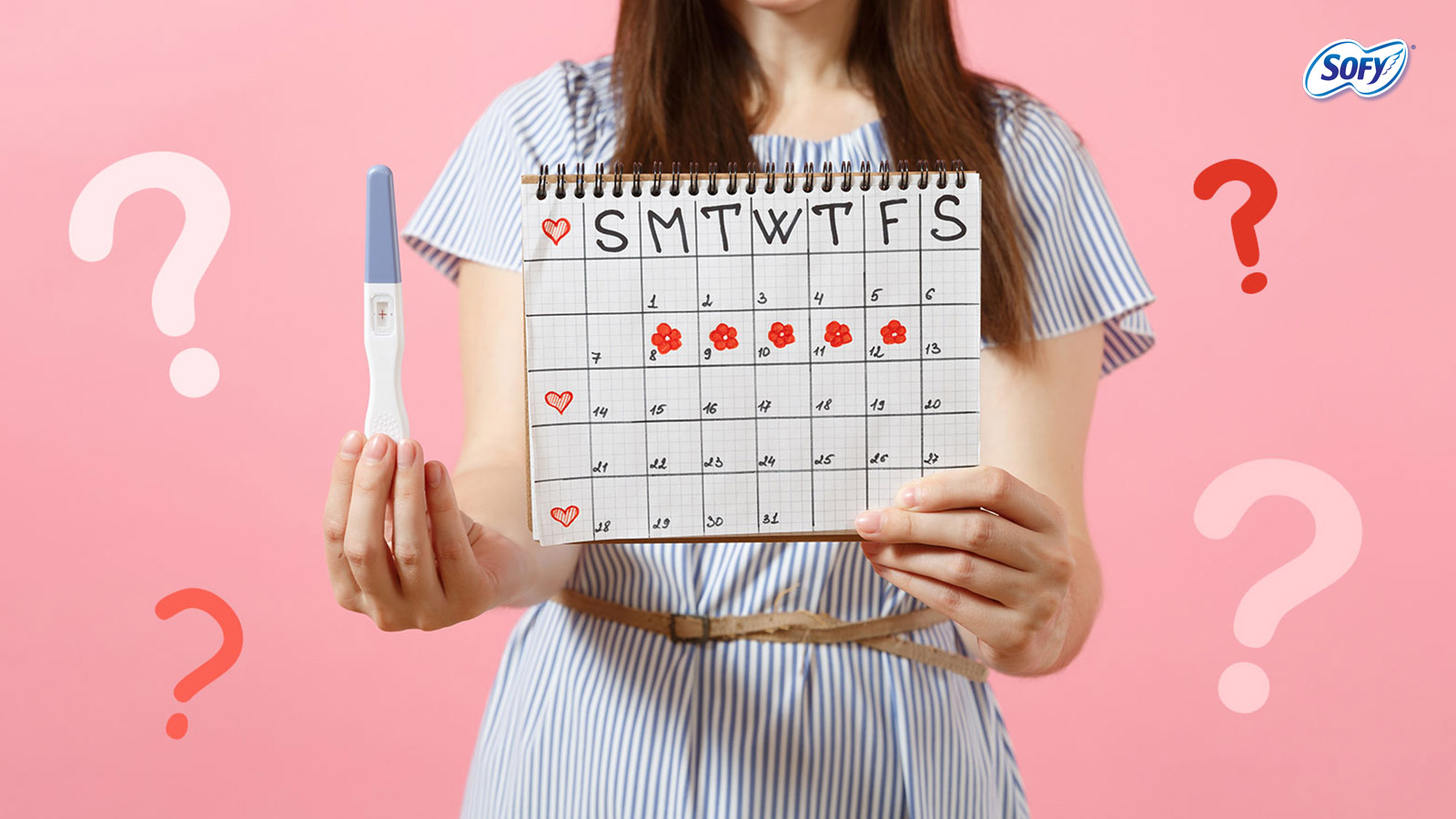

Whether you are contemplating the pros and cons of period sex or have made up your mind to give it a try, there is one aspect you should give attention to well in advance, and that is pregnancy. If you do not have any plans of getting pregnant anytime soon, unprotected sex should never be on your mind, even if you are on your periods. There are people who believe menstruation to be the safest window to have unprotected sex, but, there is no such thing as a ‘safe window’. There are however lesser chances of getting pregnant during periods, but that should not be counted upon.
Conception happens when ovulation takes place. Ovulation is the process when the ovary releases an egg and is the most fertile period in a month to get pregnant. A vaginal bleeding can take place during ovulation which is often mistaken for menstruation. And having sex during this time naturally increases the chances of getting pregnant.
The ovulation cycle for an average woman is between 28 to 30 days which means if you have sex on your periods, ovulation will not take place anytime soon. But, the problem here is, if you happen to have a shorter cycle, there won’t be much gap between periods and ovulation. And it is said that sperms are great swimmers hence, can definitely swim their way even when the tide is high.
Also, you must consider the fact that a man’s sperm can live up to several days in the uterus after ejaculation. Hence, the chances of getting pregnant will still be there towards the end of your periods. If you are trying to conceive for a long time now, period sex won’t be of much help to get you pregnant unless your cycle is less than 28 days, but there is still a chance. And for those of you not wanting to get pregnant, it is mandatory to have protection on during sex. You can go for convenient contraceptive options like condoms or birth control pills. But, always keep in mind that birth control pills do not protect you from Sexually Transmitted Diseases (STDs). Hence, it is always wise to make your partner wear a condom.
FAQ’s
2. Why do some people believe you can’t get pregnant during your period?
The belief stems from the idea that ovulation only happens after the period ends, so people assume no egg is present when bleeding occurs. However, Sofy explains this isn’t always accurate, especially if you have a shorter cycle.
3. How does cycle length affect the risk of pregnancy during a period?
If a person has a shorter cycle (for example less than 28 days), the time between period and ovulation may be very short. Sofy notes that in such cases, sperm left behind from period-time intercourse could meet an egg soon after, raising the chance of pregnancy.
4. Can the bleeding during ovulation be mistaken for a period?
Yes. The article explains that vaginal bleeding around ovulation can be misinterpreted as menstruation. If you have unprotected sex thinking it’s a period, you might be in fact in a fertile window, increasing pregnancy chances.
5. Do you need contraception even if you’re on your period?
Yes. Sofy emphasises that there is no “safe window” when you can have unprotected sex and automatically avoid pregnancy. Using contraception consistently is advised if you are not planning to conceive.
6. How long can sperm survive inside the body and why does that matter?
According to the article, sperm can live for several days inside the uterus. This means if intercourse happens during your period and then ovulation happens soon after, the surviving sperm might fertilise the egg.
7. If I’m trying to conceive, does sex during the period help?
Not necessarily. For those actively trying to conceive, sex during menstruation is rarely the most effective time unless your cycle is very short. Sofy notes that the most fertile window is around ovulation.
8. If I’m not trying to conceive, is it safe to skip contraception because of my period?
No — the article warns against assuming your period is contraceptive protection. Since ovulation timing and sperm survival vary, you should use reliable contraception every time if avoiding pregnancy.
9. What signs suggest I might be closer to ovulation than I think?
Some changes—like cervical mucus becoming thinner and stretchy, or slight ovulation discomfort—may indicate you’re nearing ovulation. Because these signs can overlap with lighter bleeding, you could mistake them for a period unless tracking your cycle carefully.
10. When should I see a doctor if I’m concerned about getting pregnant during my period?
If you have irregular cycles, heavy bleeding, or confusion about your cycle phases, it’s wise to consult a healthcare provider. They can help clarify your cycle patterns, assess fertility or contraception needs, and guide you appropriately.