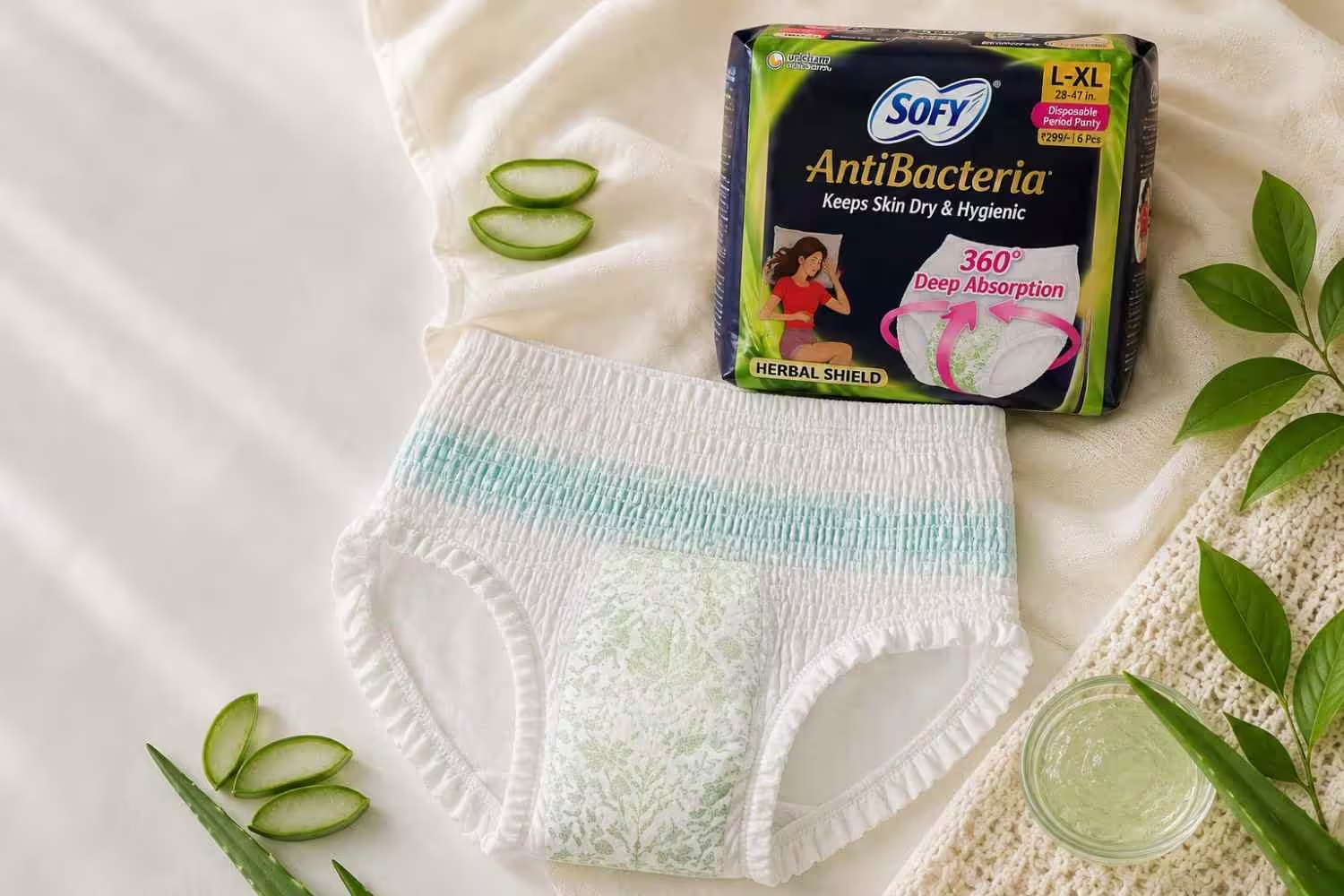

Period panties are underwear with built-in absorbent layers that replace or back up a pad during your period. Before buying a pair, check five things: absorbency matched to your actual flow, full coverage at the back and sides, a breathable fabric that won’t trap heat, odour-resistant lining, and a waistband that stays put without digging in. Get these right, and the panty does its job quietly, without you thinking about it all day.
Quick Reads:
- Absorbency should match your heaviest hour, not your average day. The best period panties for heavy flow are built with a wider, denser core through the centre, not just a thicker overall pad
- Coverage at the back matters more than people expect, especially for anyone who sits for long stretches or sleeps on their side, since that’s where most period leaks actually happen
- Breathable fabric isn’t a nice-to-have; it’s the difference between a panty that feels fine for 4 hours and one you’re desperate to change by hour 2
- Antibacterial panties use a treated inner layer to slow odour-causing bacteria, useful on a long commute or a full workday with no quick access to a change
- A waistband that’s too tight leaves marks and rides up; one that’s too loose shifts the absorbent zone away from where you actually need it
There’s a very specific moment most of us have had: standing in front of an online cart at 11 pm, six tabs open, trying to figure out if this particular pair of period panties will actually hold up through a full day at work, or if it’s going to be one of those “wear a pad just in case” situations anyway. Nobody warns you that period panties, despite looking identical online, perform wildly differently depending on what’s actually inside them. The print, the brand name on the box, none of that tells you anything about whether you’ll be comfortable by 3 pm.
We’ve spent enough time listening to what women actually want from their period products to know the disappointment usually comes down to the same five gaps. Get those right before you buy, and the rest falls into place on its own.
What Are Period Panties?
Period panties are underwear with a few clever layers built right in to soak up your flow. Usually there’s a soft, moisture-wicking layer against your skin, an absorbent core doing the heavy lifting underneath, and a leak-resistant outer layer holding it all together, but from the outside, they look and feel just like regular underwear. No sticking, no repositioning, none of the usual pad fuss. They just stay put and stay discreet.
According to a recent survey, only 5.7% of Indian women currently use period panties compared to 87.8% who rely on sanitary pads, which tells you this is still a category most people are just discovering, not one they’ve already mastered.
That’s actually good news. It means most of the confusion buyers feel isn’t a personal failing; it’s a genuinely new category with genuinely different things to check for.
Feature 1: Absorbency, How Much Do You Actually Need?
Absorbency needs are set by your heaviest hour of the day, not by an average across your cycle, and getting that match wrong is the single biggest reason first-time buyers feel let down. Someone with a heavy flow on day two might need double the capacity they’d use on day four, which is exactly why the best period panty for heavy flow is built with a concentrated, wider core running through the centre panel rather than uniform padding across the whole panty.
To understand it better: take someone in Mumbai managing a consistently heavy first two days, commuting an hour each way, typically going from changing every 2 to 3 hours in a light-absorbency pair to a comfortable 6 to 8 hour stretch once they switch to one built for heavy flow, without the panty feeling any bulkier against the body.
Feature 2: Full Back Coverage, Why Does It Matter So Much?
Full back coverage matters because that’s genuinely where most leaks happen, particularly overnight or on a long overnight train journey with no easy access to a changing room. Full coverage period panty extends the absorbent zone further up the back and around the sides, not just through the centre.
A panty that only protects the front centre panel looks reassuring in a product photo and then lets you down the moment you lean back in a chair or roll over in your sleep, which is exactly the scenario a lot of travellers describe when a centre-only design fails them.
Want to actually check coverage before you buy? It’s easier than it sounds.
- Skip the “full coverage” label and go straight to the product description for actual back-panel details.
- Check the rise, since high-waist styles usually stretch coverage further up the back.
- Dig up a few reviews that specifically mention overnight or long-sitting use. Those tend to be the most honest indicator you’ll find.
Feature 3: Fabric Breathability, Why Does It Change How a Period Panty Feels?
Fabric breathability changes everything about how a period panty feels after the first hour, which is exactly when a synthetic, plastic-feel liner starts trapping heat against the skin. That heat build-up is a big part of why some people find period panties uncomfortable after only a couple of wears, even when the absorbency itself is fine.
A breathable, cotton-blend liner lets air move while the inner absorbent layer does the actual work of holding fluid, so you get protection without the sauna effect underneath your clothes. Fabric intended for prolonged skin contact is best when certified safe under a recognised standard, as per OEKO-TEX Standard 100, which tests textiles for harmful substances before they’re cleared for continuous wear.
Feature 4: Antibacterial Fabric, What Really Makes It Work?
A fabric becomes genuinely antibacterial when the inner layer is chemically treated to slow the growth of odour-causing bacteria, rather than relying on fragrance to mask a smell after it’s already there. The treatment works continuously throughout the day instead of activating only when things go wrong, which is the real difference between a fabric that manages period odour and one that simply covers it up.
Antibacterial panties matter most on days when a quick change isn’t realistic, such as a long commute, a full college timetable, or a flight with no easy access to a bathroom. It’s a genuinely different mechanism working quietly in the background, not a fragrance layered on top after the fact. Sofy’s approach to this has always been the same: the fabric should do the work, not a scent that hides what it hasn’t fixed.
Feature 5: Waistband Fit, What Actually Keeps It in Place?
A waistband stays put when it’s wide and soft enough to sit at your natural hip line without rolling down, and firm enough not to leave marks by evening. It sounds like a small detail until you’re eight hours into wearing it, when it becomes the thing you notice most.
Too tight, and it’s digging into your skin by hour eight of a shift; ask any nurse doing a 12-hour rotation, and they’ll know exactly what that feels like. Too loose, and suddenly the whole absorbent zone has drifted off to who-knows-where, undoing every bit of engineering that went into the fabric and coverage. What you actually want is a soft, wide waistband that moves with you instead of fighting you. That’s usually the whole difference between a pair you reach for every month without thinking twice, and one that gets worn once and quietly banished to the back of the drawer.
Conclusion
The right pair of period panties genuinely stops being something you think about once you’ve got the fit and absorbency sorted, which is really the whole point. Next time you’re comparing options, skip past the styling photos and check these five things directly: flow match, back coverage, fabric breathability, odour control, and waistband fit. Everything else, the colour, the print, the brand story, matters a lot less than whether the panty actually does its job quietly through a full day.
Frequently Asked Questions
1. How many hours can I wear period panties safely?
Most period panties are comfortable for 6 to 8 hours, depending on flow and absorbency level, though heavy flow days may need a change closer to every 4 hours.
2. Can a period panty replace a sanitary pad completely?
Yes, for many people, though some prefer combining a lighter period panty with a pad or cup on their heaviest days for extra reassurance.
3. Do antibacterial panties smell different from regular period underwear?
No, antibacterial lining works by slowing the growth of bacteria, not by adding fragrance, so there is no added scent, just less build-up of odour throughout the day.
4. Are full coverage period panties bulkier than regular ones?
Not necessarily. For full coverage, it’s about how the panty is shaped and where the absorbent layer extends, not adding extra bulk or thickness.
5. What’s the biggest mistake first-time buyers make?
Buying one absorbency level for the entire cycle. Flow changes day to day, and matching the panty to your heaviest hour rather than your average avoids most leak complaints.